
- Published on
Are We Building Business Meaning Backwards?
- Authors

- Name
- Lars Fredholm
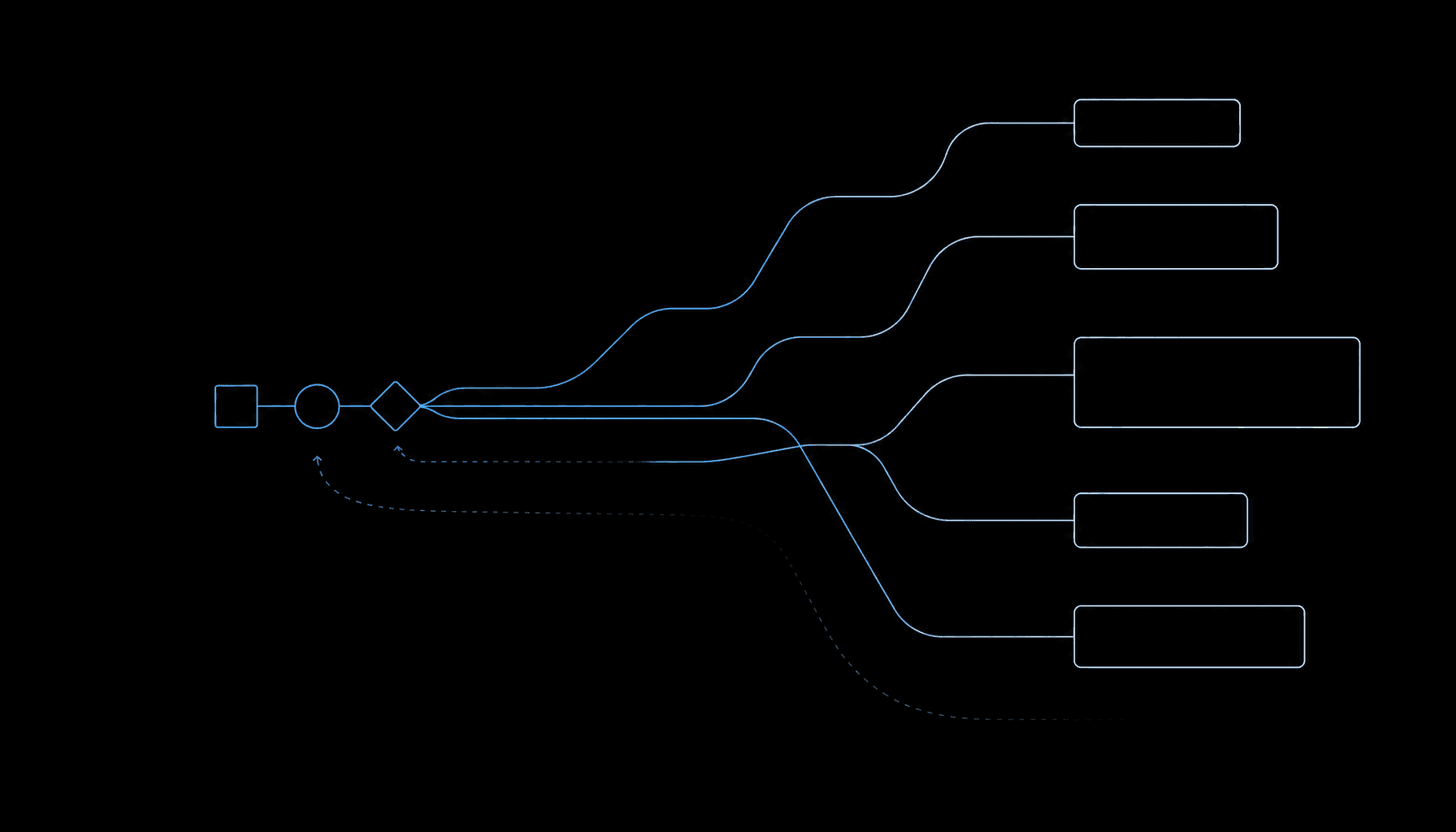
Giving an AI agent access to a semantic layer makes sense: it can use definitions the business already relies on. Where we risk working backwards is asking the agent to infer how the whole business works from definitions written for particular reports.
A semantic layer connects business terms to data. It defines which records represent customers, how they relate to subscriptions, and how metrics such as revenue are calculated. In business intelligence (BI), these definitions help reports and dashboards produce consistent results. Agents can use them too, rather than inventing calculations from database tables.
TL;DR: A semantic layer can tell an agent how Finance counts paying accounts or how Product counts people using the service. We get it backwards when we take either count as the definition of a customer for the whole business.
- A reporting definition contains choices
- An ontology does not automatically reverse the direction
- Use the reports as evidence, not the final authority
A reporting definition contains choices
Consider a subscription business. Finance counts paying accounts, while Product counts people who use the service. One account can pay for several subscriptions, and several people can use each subscription. Both teams can produce correct numbers because they are answering different questions.
Now someone asks an agent:
How many customers do we have?
Giving it both calculations does not settle the question. It needs to understand the difference between an account, a subscription, and a person, then establish which one the user means.
Modern semantic layers can represent these distinctions. Cube supports shared metrics, dimensions, joins, and access rules. Snowflake Semantic Views explicitly model business entities and relationships. The limitation is not that semantic layers contain no business meaning. It is that each model contains the meaning someone needed for its intended use.
Finance may have had no reason to model the people using a subscription. Its definition of “customer” is therefore a reporting choice, not necessarily a definition that applies across the business. Treating it as one carries that choice into questions it was never meant to answer.
An ontology does not automatically reverse the direction
An ontology describes concepts and their relationships explicitly. In our example, it could distinguish the account that pays, the subscription that provides access, and the people who use it. Finance’s and Product’s metrics could then be defined using those shared concepts.
This is where an ontology can complement a semantic layer: explaining how business concepts relate, while the semantic layer specifies how particular results are calculated. Cube draws a related distinction between descriptive context that helps an agent interpret a question and executable definitions used to answer it.
But copying Finance’s model into an ontology would still leave “customer” defined as a paying account. Changing the format does not broaden the meaning. We would still be working backwards unless we examined the assumptions behind the original model.
There is no need to insist on a separate ontology product. A semantic layer may already cover the required concepts. What matters is that the reporting calculation follows from an explicit business definition, rather than silently becoming that definition.
Use the reports as evidence, not the final authority
Existing reports and semantic layers contain valuable knowledge. They are often the best place to begin, especially where years of business decisions have never been documented elsewhere. Starting there is practical; treating everything found there as universally applicable is the mistake.
Take one business question, identify the concepts it requires, and check the assumptions in the existing models. Agree where each definition is maintained, then connect the reporting calculations and agent guidance to it. Generate repeated representations where practical instead of maintaining separate versions of the same rule.
At Daana, we start by defining things like accounts and subscriptions and how they relate, then generate the data model from those definitions. I wrote more about that approach in Context Isn’t Enough.
We do not need to model the entire business before delivering anything useful. But we should be clear about the direction. Accounts, subscriptions, and people exist independently of our customer reports. Their meaning should guide those reports (and the agents using them), not depend on what a report happened to count.