
- Published on
Meet Peiman Khorramshahi: CTO at Daana
- Authors

- Name
- Siavoush Mohammadi

- Name
- Peiman Khorramshahi
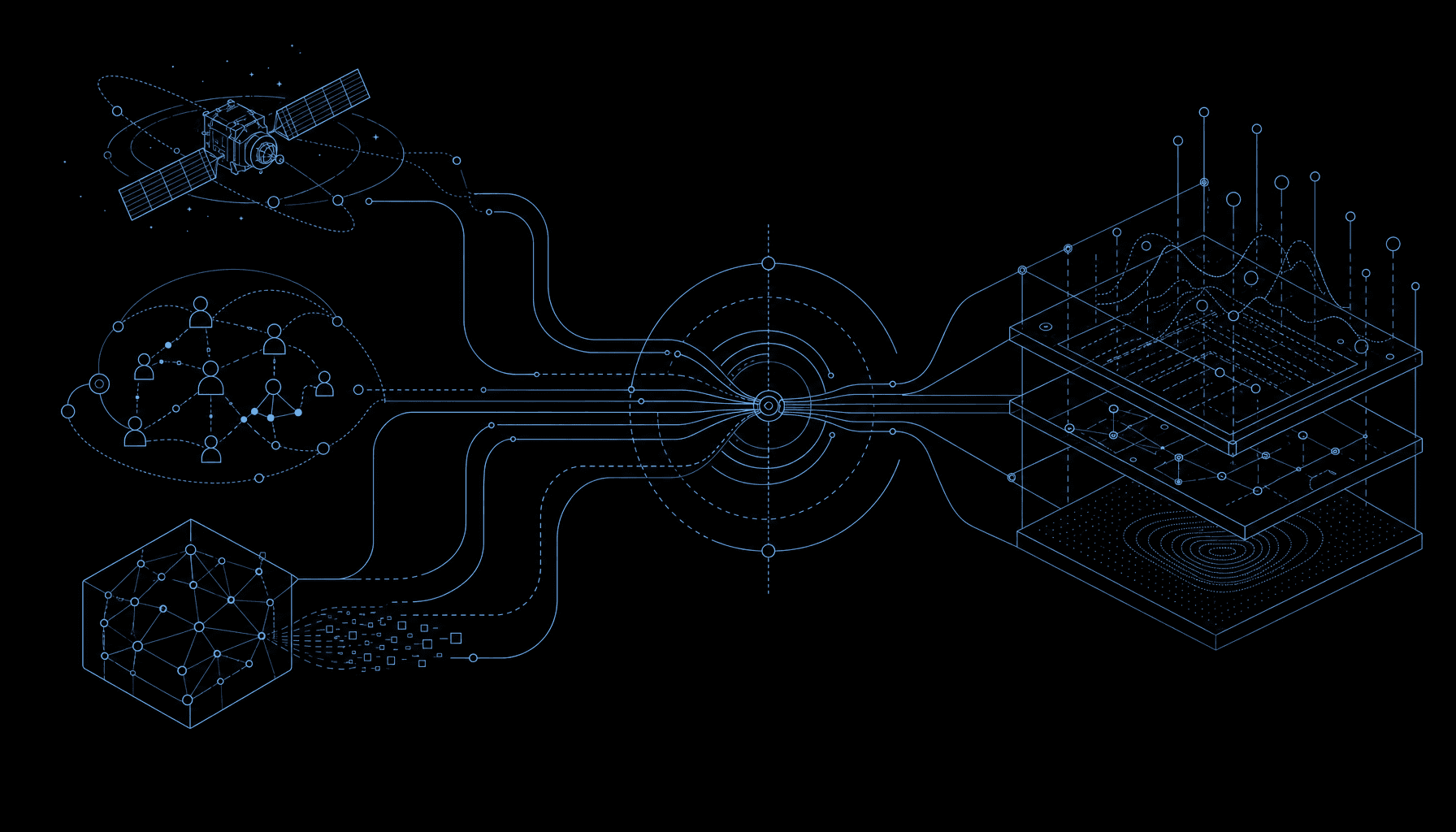
Peiman's career path makes absolutely no sense on paper - satellite chip design, agile coaching, AI development. Steve Jobs talked about connecting the dots only looking backwards. Peiman's dots only connect if the thread is "complex systems" - and then suddenly satellites, human organizations, and data platforms are the same problem at different scales.
He spent years designing FPGA and ASIC chips for satellites at Ruag Space (now Beyond Gravity) - hardware that literally cannot fail because there's nobody up there to reboot it. Then he moved into agile coaching at CEVT and Volvo Group, building high-performance teams in complex organizational structures. When I started explaining the complexities of analytical data platforms, he didn't politely nod - he started asking questions that most data people don't ask until year three.
Peiman architected and built daana-cli from the ground up in Go, turning what was previously Patrik's pure SQL-based Focal framework into a proper engineering platform. His world-class AI development skills have been a massive part of why we've been able to move as fast as we have. The way he approaches software architecture is exactly what you'd expect from someone who spent years making sure things don't fail in orbit.
You went from building microchips for satellites to building a data platform CLI. What's the thread that connects those?
Well, it is a long story. The short version, I have always liked programming and electronics. As one grows as an engineer, especially with high quality products - space stuff is of highest quality because it cannot fail - it made me think of robust systems that are iterated until they stand the test of time. The way to do that is feedback loops. That's where data, or more correctly insight, comes in. I see data platforms as a means to an end when it comes to getting insight on anything that matters to you. It speeds up the process of creating robust systems with minimum waste. A CLI tool that can quickly turn the wheels is invaluable. Especially because it can be used by both humans and AIs.
What's the short version of your career path? Space to Agile to AI to Daana sounds like a wild ride.
Well actually it is going from one end of nerdiness to another and they are more connected than you could think. In the space industry I had the privilege to work with some of the brightest minds I have met and that set the bar for the rest of my career. So, we built robust architectures for the space stuff that at times could be very complex. When I later on came into contact with agile, the complex systems that you had to build were even more complex because you build systems with humans in them and ALL the complexities that comes with that to create high performance teams. Teams to work in a group of teams, the company politics, human behaviour is super complex and diverse. That was a challenge I loved, and when those things work well, the gratification of making people grow and learn is invaluable to me. It has its share of headaches too, I can tell you. :)
The Daana story comes into play when I met Siavoush and started to understand some of the complexities of how to handle data in an analytical way. I was used to operational systems and didn't even think that analytical systems are super different. It was very complex and interesting to me. So the red thread, for me, is basically I like complex systems and trying to understand them is the challenge I pursue.
You built daana-cli from the ground up. Without getting too deep into the weeds, what was the hardest architectural decision you had to make?
Separation of concerns was the hardest. To make sure each part was doing its own thing and not cluttered with everything. Another thing that is worth mentioning was the brand new automated test harness to make sure every feature we deliver behaves like what we promise. I think these are turning out nicely now. :)
Hot take time: what's something you believe about AI in data engineering that most people would disagree with?
I think it is possible to create fully autonomous agents that can build your whole stack with super high quality just by asking the business people questions.
How do you think about the balance between declarative simplicity for the user and the complexity that lives under the hood in the engine?
Well it depends on what you mean. I think the balance is OFF by a lot meaning the user now has a VERY easy way of doing very complex things done by the engine.
What does a typical day look like for you at Daana right now?
Well I have maybe 7-10 terminal windows running with AI agents that run AI agents, plus helping and coaching our people and AI to understand how to build great software.
What are you building right now that you're excited about?
We are now setting the foundation of daana-cli and are almost releasing a major release, testing it with customers that seem to love it. THAT IS EXCITING. On my spare time I am trying to build an associative memory for my AI agents that mimics plasticity that we humans have in our brains.
Peiman is currently heads-down on the v0.7.0 release of daana-cli - the platform he architected and built from scratch - which brings incremental batch loads, parallel pipeline execution, and a bunch of architectural improvements. Last but not least the test harness that validates everything. After that, expect him to keep pushing the boundaries of what AI agents can do in the data engineering workflow. And apparently, building artificial brain plasticity on the side. No big deal.
Want to see what we're building? Check out daana.dev.